DISCOVERING SMOVEY THROUGH pARKINSON'S disease
The number of people with Parkinson's disease is steadily increasing. In addition to medication and other treatments, exercise plays a crucial role in maintaining motor skills.
Numerous studies show that vibration training has a beneficial effect on stability, gait, balance, postural control, and proprioception. These areas are often affected to varying degrees in Parkinson's disease, depending on the form and severity of the symptoms.
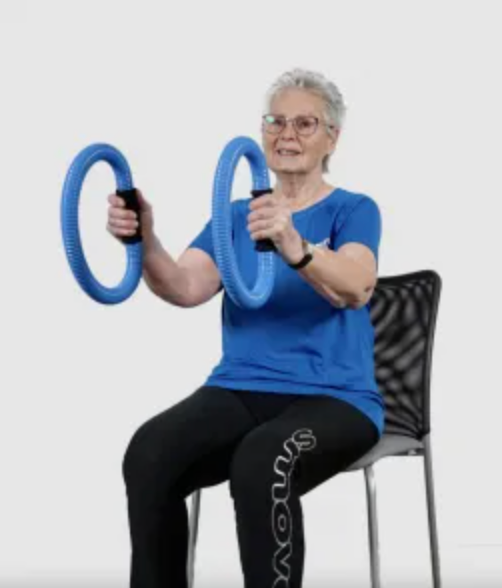
Regular training with smovey can help maintain and sustainably improve the quality of life for people with Parkinson's disease. Functional movement patterns promote coordination and balance, muscle building, and mobility. Additionally, the vibrations stimulate the nervous system, leading to the aforementioned positive effects.
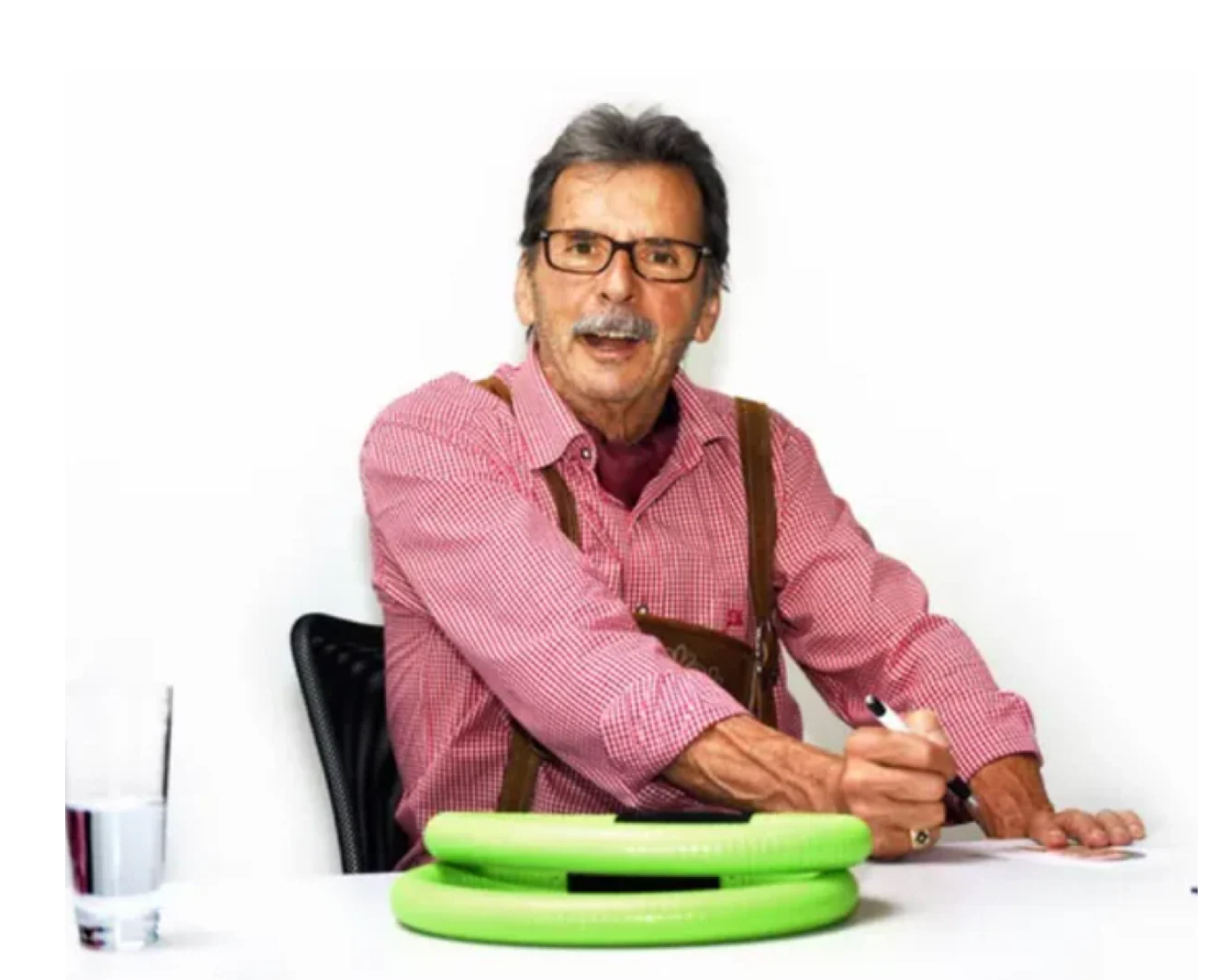
The inventor of the vibrating green rings, Johann "Salzhans" Salzwimmer, himself suffered from Parkinson's disease over 24 years ago and originally invented the smoveys for his own therapy. Today, they help many thousands of people around the world – and, as a bonus, bring a smile to their faces!
ABOUT Johann “Salzhans” Salzwimmer
The inventor of smovey and the Vibroswing-System is
Johann “Salzhans” Salzwimmer.
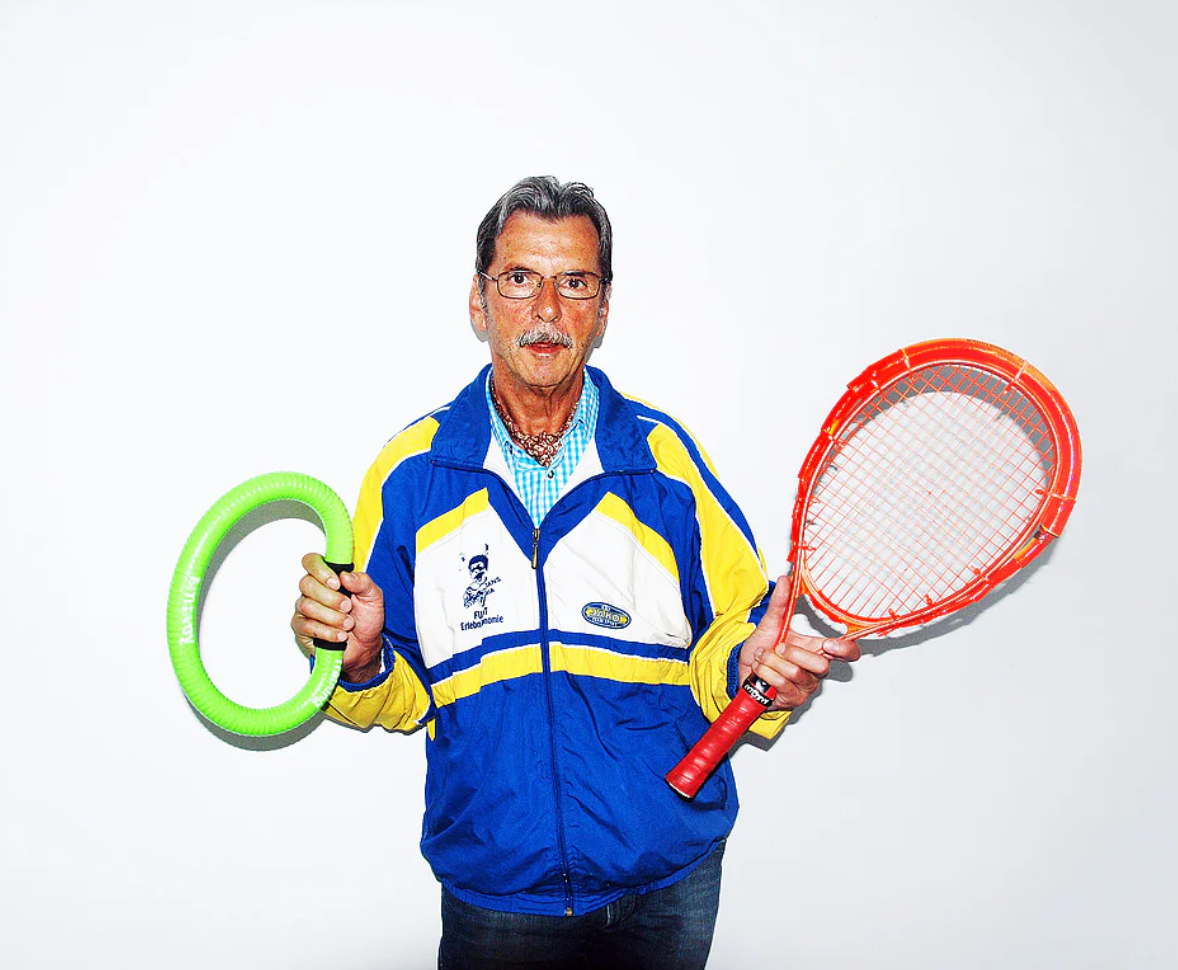
Full of energy and enjoying life, he was diagnosed with Parkinson’s disease at the end of the 1990s. He accepted his diagnosis, but known throughout the Steyr/Ennstal region as an outstanding tennis player and skier, he began to rapidly develop a method to stabilize his condition. The result of this research was the Vibroswing-System and the movement and lifestyle bearing the name “smovey.”
A healthy life following the example of Mother Nature: He has succeeded over the years to maximize his quality of life while minimizing his dependence on medicine. He also stays true to his mantra: “The power of fluid movement – and the strength of natural rest.
In addition to the right medication, “exercise” has also been recognized as a substantial part of the therapy of patients with
Parkinson’s disease. Through his own hardship and experience with this neurodegenerative disease, Johann Salzwimmer has created a movement device that not only helps him in maximizing his quality of life, but has also supported numerous other people with health issues. But let’s go back to the beginning and the creator of this device and role model for many people: Johann “Salzhans” Salzwimmer from Großraming in Upper Austria is a beacon of hope and role model for many Parkinson’s patients. As a successful innkeeper, tennis and ski instructor, he was firmly rooted in life when he was diagnosed with
Parkinson’s disease in 1996.
THE SWING OF LIFE
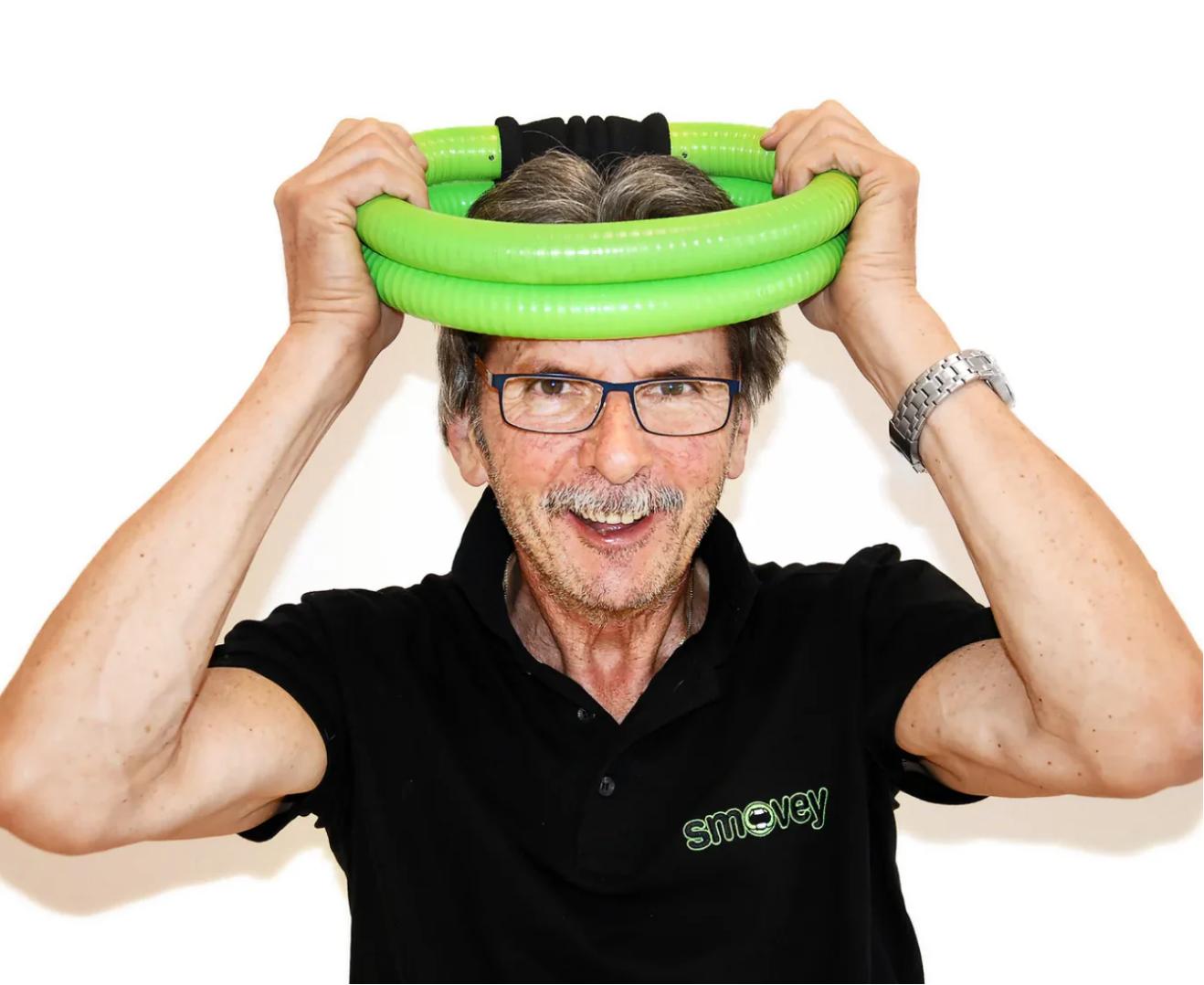
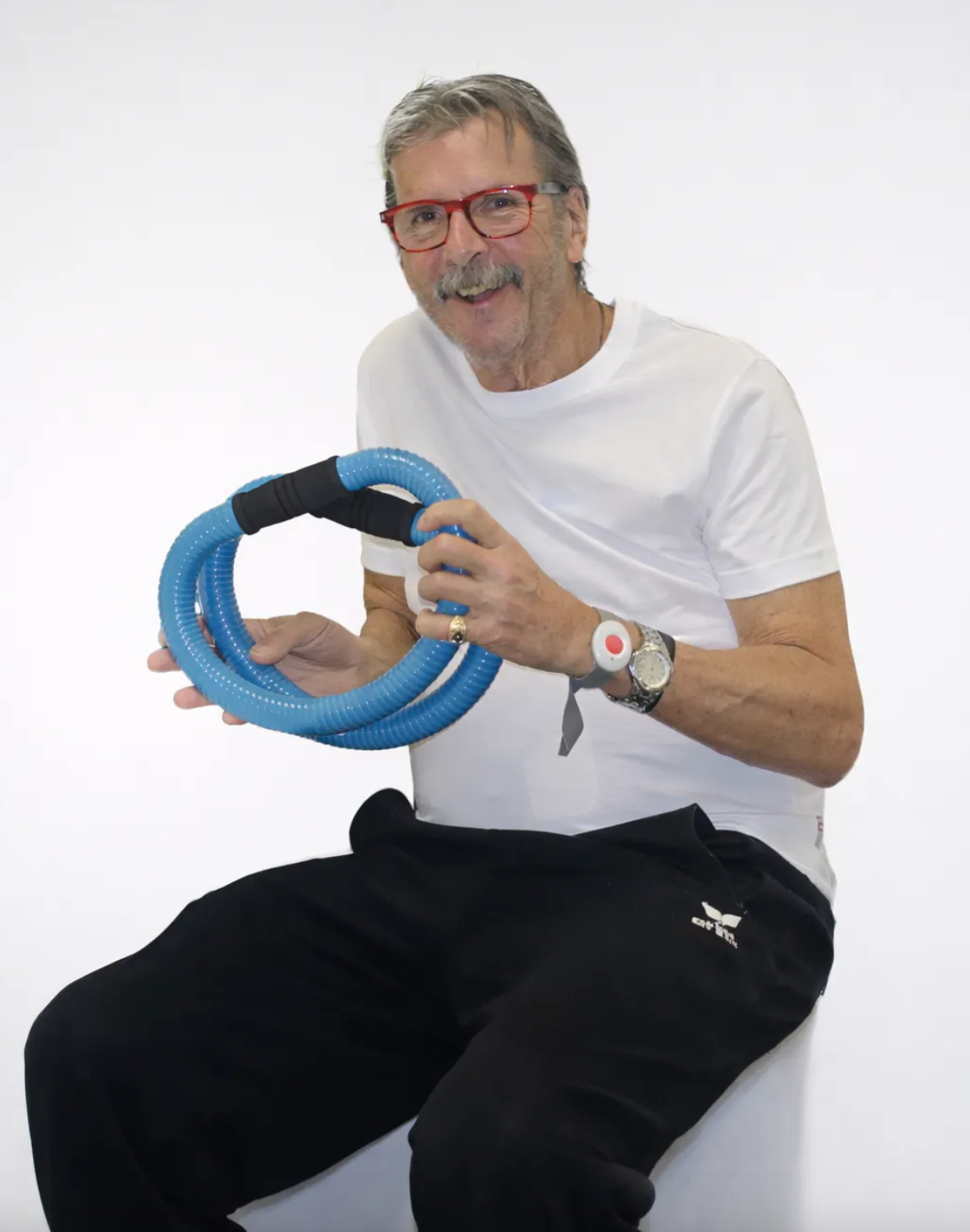
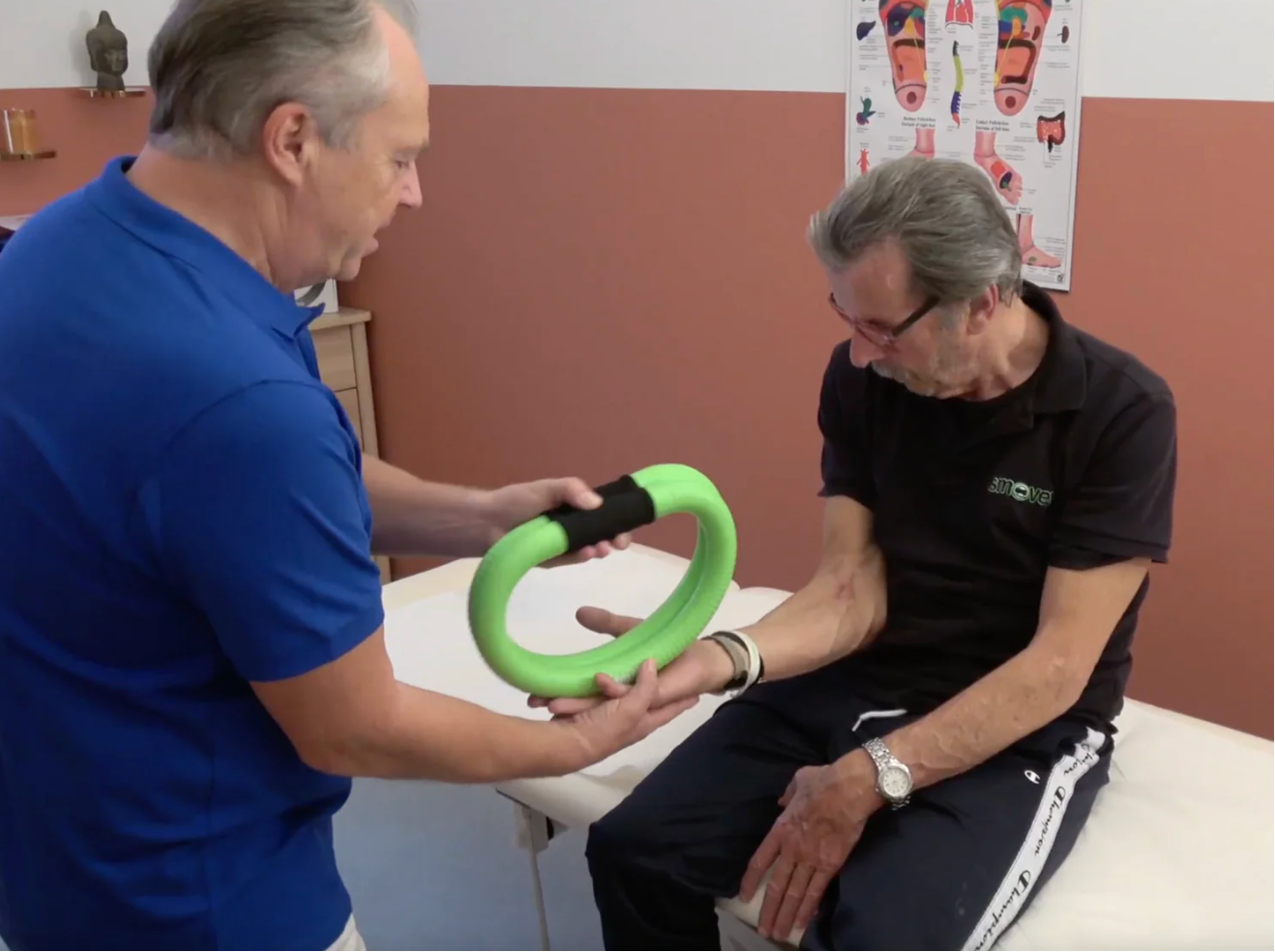
He experimented with tennis rackets, went for a walk with them, but he lacked momentum. He then attached a garden hose with free-running balls to the curve of the tennis racket that would increase the momentum and thus the effect., but he was not satisfied with the result. After an intense phase of trial and error, a corrugated pump-suction hose at the local plumber caught his eye. He took this hose home, filled it with balls and attached a makeshift grip: The first swing ring was born. Today the well-known swing rings called smovey are handmade by people with disabilities in a workshop in Weyer and help people around the world. The rings are used in health and therapy settings, but are equally popular for smoveyWALKING and fitness programs.
and...smovey
Was Born
On the one hand, smoveys generate momentum and on the other hand, they generate vibrations. The four free-running steel balls on the inside of the corrugated tube create a vibration that is very beneficial for people. These vibrations reach and activate the deep muscles and the nervous system. The hand reflex zones transmit these fine stimulating and activating vibrations to the entire organism. Salzhans made use of precisely this effect and swung his rings for several minutes, multiple times a day.
The outcome: He was able to move more freely, experienced far less freezing, if at all, and was able to perform larger upward and sideward movements. He could also perceive an improvement in his gait; swinging his arms helped him with lifting his feet. Johann Salzwimmer died quite unexpectedly in February 2022 in his 76th year of life. He was full of courage and confidence to the end of his life and swung his beloved smoveys until shortly before his death. His invention and above all the people he got to know through it and who valued him and his life‘s work were his lifeblood and gave him motivation and drive to the end.
Parkinson’s disease and moving with smovey
According to a study, Parkinson’s is one of the fastest growing forms of neurodegenerative diseases. In 1990, roughly 2.5 million people were affected, in 2016 this number rose to 6.1 million worldwide (Springer Medizin InFo Neurologie, 2019).
The causes for Parkinson’s disease remain largely unexplained; aging processes, genetic factors, oxidative stress are named as risk factors (Gerlach et al, 2007). It has been found that the dopamine-producing group of nerve cells gradually degenerates, creating an imbalance between neurotransmitters and causing the known movement disorders (Ludwig et al, 2007).
Common symptoms include motor changes such as slowing movements, tremor (shaking), muscle stiffness as well as freezing (difficulties starting to move), the tendency to fall etc. (Przuntek et al, 2002). In addition, various issues such as balance disorders, an impaired ability to swallow, incontinence and bladder weakness, digestive problems, memory disorders, may occur.
This is oftentimes the beginning of a downward spiral that may lead to serious psychological problems and even depression due to increasing insecurity, social withdrawal, self-doubts, shame, etc. (Ludwig et al, 2007).
smovey & vibrations for Parkinsons
The Limitations of Traditional Parkinson's Therapy
Traditional drug therapies and deep brain stimulation often fail to provide long-term improvements for core Parkinson’s symptoms like walking, balance, speech, and cognition. While alternative exercises like Tai Chi and strength training show promise (Baumann et al., 2018), smovey training offers unique, measurable, short-term improvements in posture, stability, and gait.
Why smovey Works: Multi-Sensory Stimulation
Unlike static, motor-induced external vibrations, smovey relies on active swinging. This creates a dynamic frequency spectrum (0 to ~460 Hz) that constantly challenges and engages the nervous system.
Smovey therapy stimulates the brain and body through four primary mechanisms:
- Motor & Cognitive Activation: Active movement stimulates the prefrontal cortex (executive functions). The centrifugal force encourages large, expansive movements essential for countering the small, slow movements typical of Parkinson's (Grust, 2015).
- Auditory Cueing: The internal rolling balls create rhythmic auditory stimuli that directly improve gait quality, similar to metronome therapy (Enzensberger et al., 1997).
- Visual & Haptic Guidance: Swinging the colored rings provides visual spatial reference points, while physical vibrations send haptic data to the sensory cortex, improving information processing (Ginis et al., 2013).
- Psychosocial Benefits: Training in a group setting boosts motivation, stamina, and self-esteem—critical factors for maintaining the mental health and long-term quality of life of Parkinson's patients.